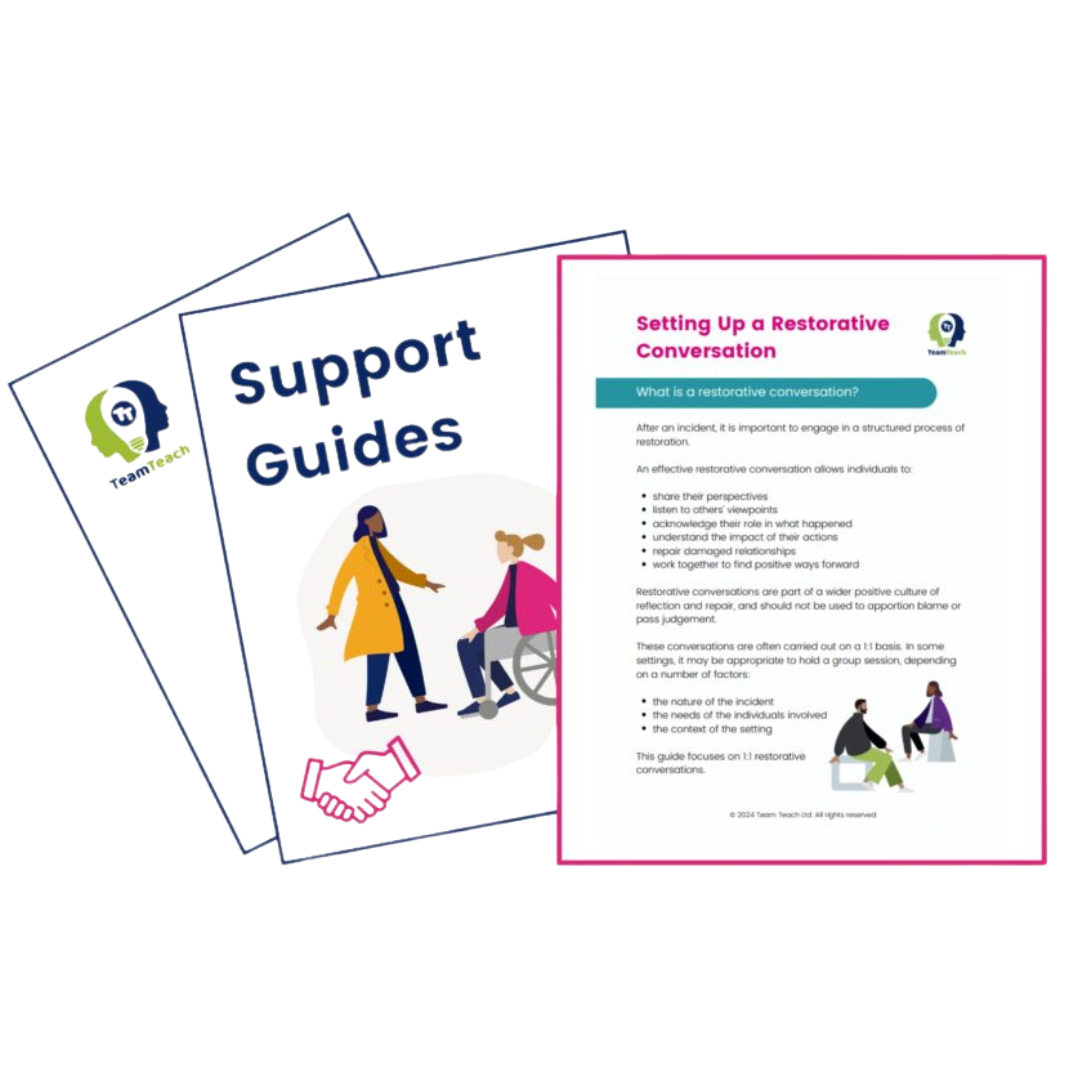

Structuring Restorative Conversations Guide
This guide details how to set up an effective restorative conversation, and includes prompts around accessibility, as well as a framework of suggested questions to use as a basis for your conversation.
After an incident, it’s important to engage in a structured process of restoration. An effective restorative conversation allows individuals to:
- share their perspectives
- listen to others’ viewpoints
- acknowledge their role in what happened
- understand the impact of their actions
- repair damaged relationships
- work together to find positive ways forward
Restorative conversations are part of a wider positive culture of post-incident reflection and repair, and should not be used to apportion blame or pass judgement.
These conversations are often carried out on a 1:1 basis. In some settings, it may be appropriate to hold a group session, depending on a number of factors:
- the nature of the incident
- the needs of the individuals involved
- the context of the setting