Behaviour and the UN Sustainable Development Goals
When the United Nations launched its 17 Sustainable Development Goals (SDGs) in 2015, it set out a bold, global vision: to end poverty, reduce inequality, and build a more sustainable and just world by 2030.
While these goals might sometimes feel vast or abstract, they are deeply connected to the everyday work we do in schools, services, and communities. The goals remind us that building positive behaviour cultures is not only about managing the here and now, but also about preparing young people to thrive in a fairer, more sustainable future.
At the heart of this lies an important truth: behaviour is communication. When we listen, reflect, and respond with compassion, we create environments where everyone has the chance to learn, grow, and succeed.
The link between behaviour cultures and the SDGs
The UN’s 17 goals cover everything from clean water to climate action, but two stand out as particularly relevant to those of us working in education, health, and social care:
- Goal 4: Quality Education: Ensuring inclusive and equitable quality education and promoting lifelong learning opportunities for all.
- Goal 10: Reduced Inequalities: Reducing inequality within and among countries, ensuring no one is left behind.
When we commit to creating a positive behaviour culture, we are directly contributing to both.
For example, we know that learning can only happen when people feel safe, supported, and respected. An environment focused on connection, consistency, and compassion is the foundation of quality education.
Equally, when we remove barriers and respond to individual needs, we take practical steps towards reducing inequalities across all sectors.
Why the SDGs matter for our practice
Creating positive behaviour cultures is about shaping environments that enable everyone to participate and belong. When we adopt this mindset, everyone benefits:
- Improved learning outcomes. When learners feel safe and respected, they are better able to engage with their education.
- Stronger staff wellbeing. Consistent, supportive behaviour approaches reduce stress and build confidence among teams.
- Greater inclusion. A reflective approach to behaviour makes space for the voices and needs of all, particularly those who are most vulnerable.
- Future readiness. By modelling respect, empathy, and collaboration, we are preparing children and young people for the challenges of a globalised world.
We see this in our practice every day: in the restorative conversations that rebuild relationships after conflict; in the calm, consistent language we use when de-escalating distressed behaviour; and in the way staff teams support one another with reflection and coaching. These small, daily actions are what turn abstract goals into lived experience.
Embedding the SDGs in our cultures
There is a temptation, when engaging with something as ambitious as the UN’s goals, to approach them through one-off activities or events: a whole-school assembly, a themed week, or a display in a communal area. While these have their place, true change comes from embedding values into the fabric of our daily culture.
In the same way that we approach behaviour support not as a quick fix but as an ongoing process of reflection and practice, the SDGs call for deep, sustained commitment. They challenge us to ask ourselves: How do our systems, policies, and relationships reflect the values of inclusion, equality, and sustainability?
For example, embedding co-regulation strategies across a whole staff team ensures that everyone responds consistently to moments of high emotion. Establishing shared scripts and de-escalation techniques builds predictability and safety for learners. These aren’t just behaviour strategies; they are cultural commitments to fairness and respect.
Learning from young people
One of the most striking features of the global movement around the SDGs has been the energy of young people. From Greta Thunberg’s climate activism to countless local youth-led initiatives, children and young people have been powerful advocates for change.
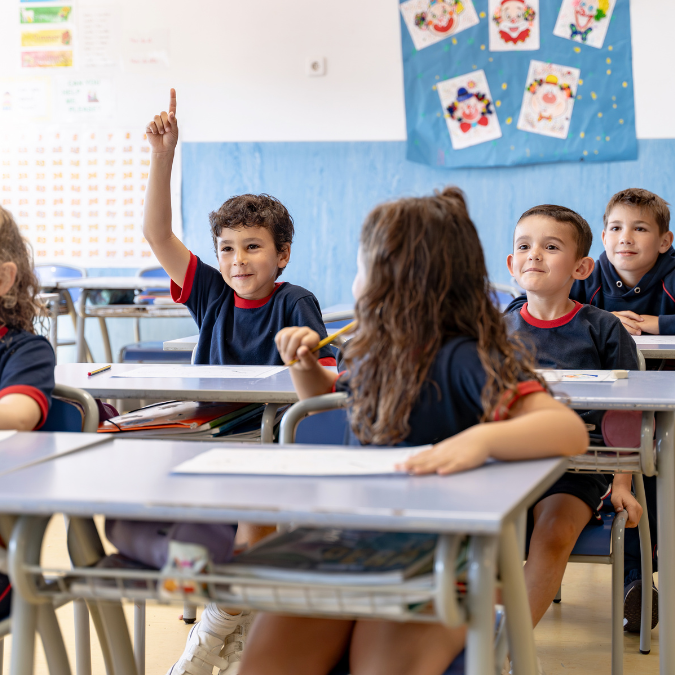
In our schools and services, we see this same drive. Students care deeply about fairness, about the planet, and about one another. When we nurture their voices and model respectful, compassionate behaviour, we support individual development and enable them to become active global citizens.
Circle times, restorative meetings, and student councils are powerful examples of this in action. By giving young people structured opportunities to express their views, problem-solve together, and repair relationships, we demonstrate that their voices matter and that they have the power to create positive change.
Behaviour as communication
Central to the Team Teach philosophy is the belief that behaviour is a form of communication. Every action tells us something about a person’s needs, emotions, or experiences. When we adopt this perspective, our role shifts: we move from seeing behaviour as a ‘problem to fix’ towards understanding it as an opportunity to connect, support, and grow.
This approach resonates powerfully with the SDGs. If our global aim is to, ‘leave no one behind’, then at a local level we must commit to hearing every voice.
We see this when we pause after an incident to reflect with an individual, asking not only what happened but what need was being communicated. We see it when staff teams debrief together, using reflective practice to build understanding, rather than blame. Each of these moments strengthens a culture where everyone is valued.
Education as a driver of progress
It is worth remembering that education itself is unique within the SDGs. Goal 4 names it explicitly, but education is also the driver of progress towards all the other goals. It equips people with the knowledge, skills, and values needed to create sustainable change.
For us, this reinforces the importance of our role. Every positive behaviour culture we build contributes not just to immediate outcomes, but to the wider global project of sustainability and justice.
A shared commitment to embedding the SDGs
None of this is simple. Building and sustaining behaviour cultures requires patience, consistency, and collaboration. It asks us to reflect on our own practice, to support one another as colleagues, and to hold onto our shared values even in moments of challenge.
But it is precisely in this effort that we align most strongly with the UN’s vision. By committing to cultures that are safe, respectful, and inclusive, we embody the principle that every person matters and that every person can contribute to a better future.
Moving forward together
The SDGs are ambitious, but they are also practical. They give us a shared language and a common framework for action, offering both inspiration and affirmation. The work we do every day, in every interaction, is part of a wider global effort to build a fairer, more sustainable world.
As we continue to embed positive behaviour cultures, let us hold this bigger picture in mind. We are not only supporting learning in the present; we are contributing to a collective future where inclusion, equality, and wellbeing are at the heart of society.
Together, we can make the SDGs more than an aspiration. We can make them a lived reality – in our classrooms, our communities, and beyond.